- House File 927 bans Minnesota's 152 kiosks (0.41% of 37,241 US total, Coin ATM Radar, Oct. 11).
- BTC falls 0.9% to USD 76,015; Fear & Greed Index at 33 (CoinGecko, Alternative.me, Oct. 11).
- State bans raise compliance costs 15-20%, slowing growth despite USD 21.3B ETF inflows (Bloomberg).
Lawmakers passed Minnesota's House File 927 crypto kiosk ban on Oct. 11, 2024, and sent it to Gov. Tim Walz for signature. The law targets Bitcoin ATMs in retail locations due to fees over 20% and scam vulnerabilities.
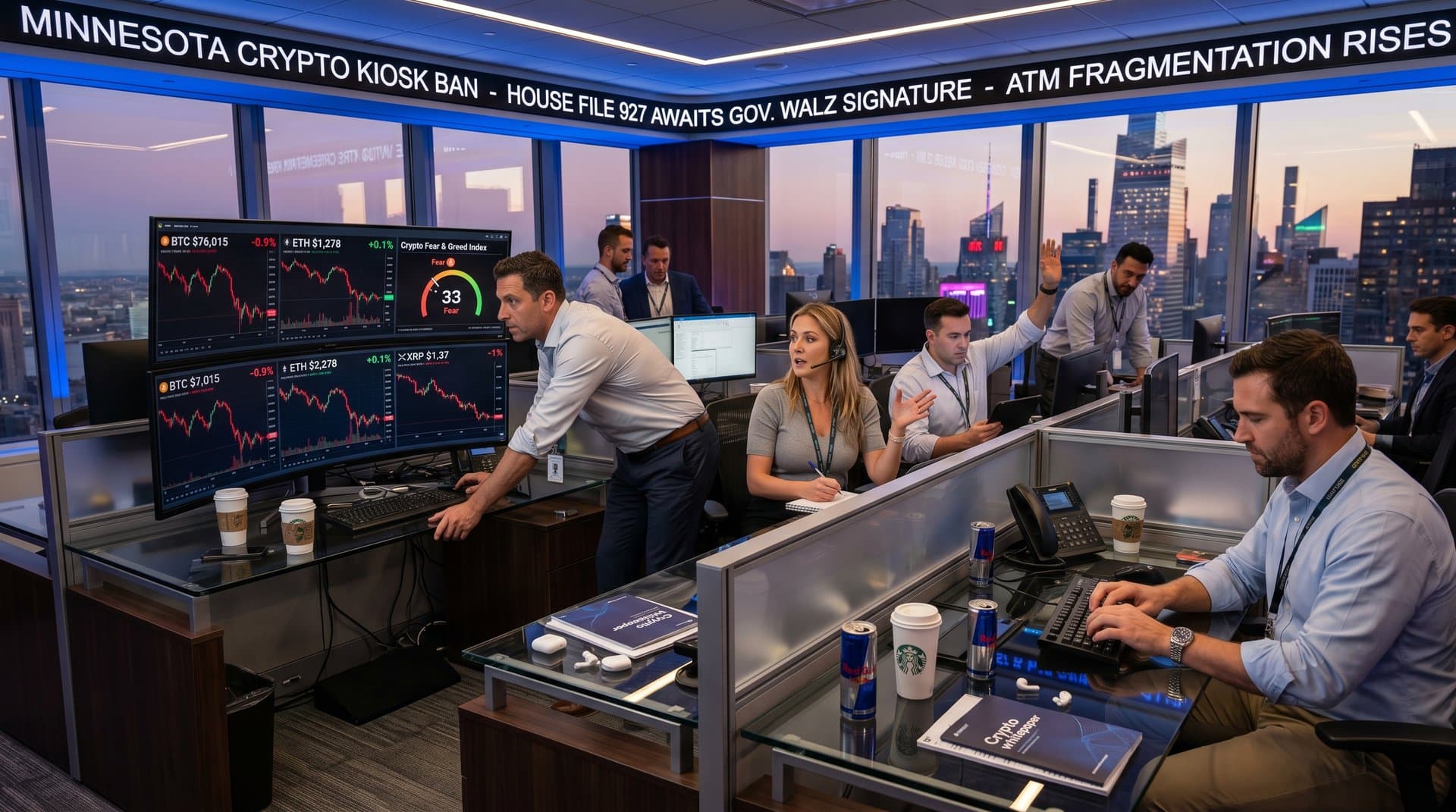
Bitcoin trades at USD 76,015 (CoinGecko, Oct. 11, 2024), down 0.9% in 24 hours. The Fear & Greed Index stands at 33 (Alternative.me, Oct. 11, 2024), indicating fear. Ethereum holds at USD 2,278 (+0.1%); XRP falls 1% to USD 1.37.
Minnesota Crypto Kiosk Ban Targets High Fees, Scams
House File 927 bans kiosks from public spaces if Walz signs it. Operators must remove machines within 90 days. Fees average 20-30% (CoinDesk, May 15, 2024; Minnesota AG consumer complaints).
Kiosks concentrate in convenience stores. Fraud reports rose 25% year-over-year (Minnesota Attorney General's Office, Q2 2024 Consumer Sentinel). Bitcoin Depot and Coinhub run over 7,500 US machines (Coin ATM Radar, Oct. 2024), yielding USD 500M+ in annual fee revenue.
Proponents emphasize consumer protection. Opponents highlight reduced access for 10M unbanked Americans (FDIC National Survey, 2023). Walz faces a November 2024 deadline, potentially raising operator capital expenses 15%.
Bitcoin ATM Market Faces US State Fragmentation
The US hosts 37,241 Bitcoin ATMs (Coin ATM Radar, Oct. 11, 2024). Minnesota's 152 units equal 0.41%. Bans trigger relocations, slowing national growth from 30% YoY to 20%.
New York requires BitLicenses; California mandates disclosures. Spot ETF launches (Jan. 2024) drew USD 21.3B inflows (Bloomberg ETF Flows, Oct. 11, 2024), enhancing liquidity. Yet kiosk curbs reduce cash on-ramps by 5-7% of retail volume.
BTC's dip links to regulatory headlines. Kiosk limits curb on-chain inflows (USD 2.5B daily average, Glassnode On-Chain Metrics, Oct. 2024). Bitcoin Depot (BTBT) stock dropped 2.1% to USD 2.45 (Nasdaq, Oct. 11, 2024).
Global Contrasts Highlight US Fragmentation Risks
Globally, 38,555 ATMs operate (Coin ATM Radar, Oct. 2024). El Salvador mandates BTC payments (2021 law). UAE added 500 kiosks year-to-date. EU MiCA (effective June 30, 2024) limits fees to 1%, lifting adoption 15%.
State Patchwork Drives Crypto Compliance Costs
Absent federal rules, states diverge: Texas grants tax breaks; New York tightens restrictions. Operators incur 15-20% cost increases (Coin ATM Radar estimates, 2024), favoring Florida's 4,200 ATMs.
Fragmentation cuts US global volume share from 45% to 40% (Chainalysis 2024 Crypto Crime Report). Ethereum L2s like Arbitrum and Optimism cut fees to 0.01%, shifting users from kiosks.
Rural Minnesotans lose cash access, turning to Coinbase (25M users). The Fed funds rate stays at 4.75-5% (FOMC, Sept. 18, 2024). The 2Y-10Y yield curve steepens 15 basis points, supporting risk assets.
Market Implications of Minnesota Crypto Kiosk Ban
Regulatory uncertainty lifts BTC 30-day implied volatility to 55% (Deribit, Oct. 11, 2024). USD 74,000 support looms despite ETF offsets. A Minnesota ban could trigger Midwest copycats, eliminating 5% of US ATMs (1,800 units).
Operators adopt biometrics to lower fees to 10%. Stablecoin legislation like the Clarity Act advances. Monitor Walz's desk and congressional votes; BTC targets USD 80,000 on policy clarity.
Frequently Asked Questions
What is the Minnesota crypto kiosk ban?
House File 927 prohibits crypto kiosks in retail for high fees and scams. Lawmakers passed it Oct. 11, 2024; awaits Gov. Walz signature with 90-day removal if enacted.
How does it impact Bitcoin ATMs?
Targets 152 Minnesota units (0.41% of 37,241 US total, Coin ATM Radar). Forces relocations, slows 30% YoY growth amid state patchwork.
Why does US state fragmentation matter for crypto?
No federal rules cause divides like Minnesota bans vs. Texas incentives. Hikes costs 15-20%, drops US global share to 40% (Chainalysis).
What is BTC's price reaction?
BTC trades at USD 76,015 (-0.9%, CoinGecko Oct. 11). Fear & Greed at 33 reflects regulatory caution.