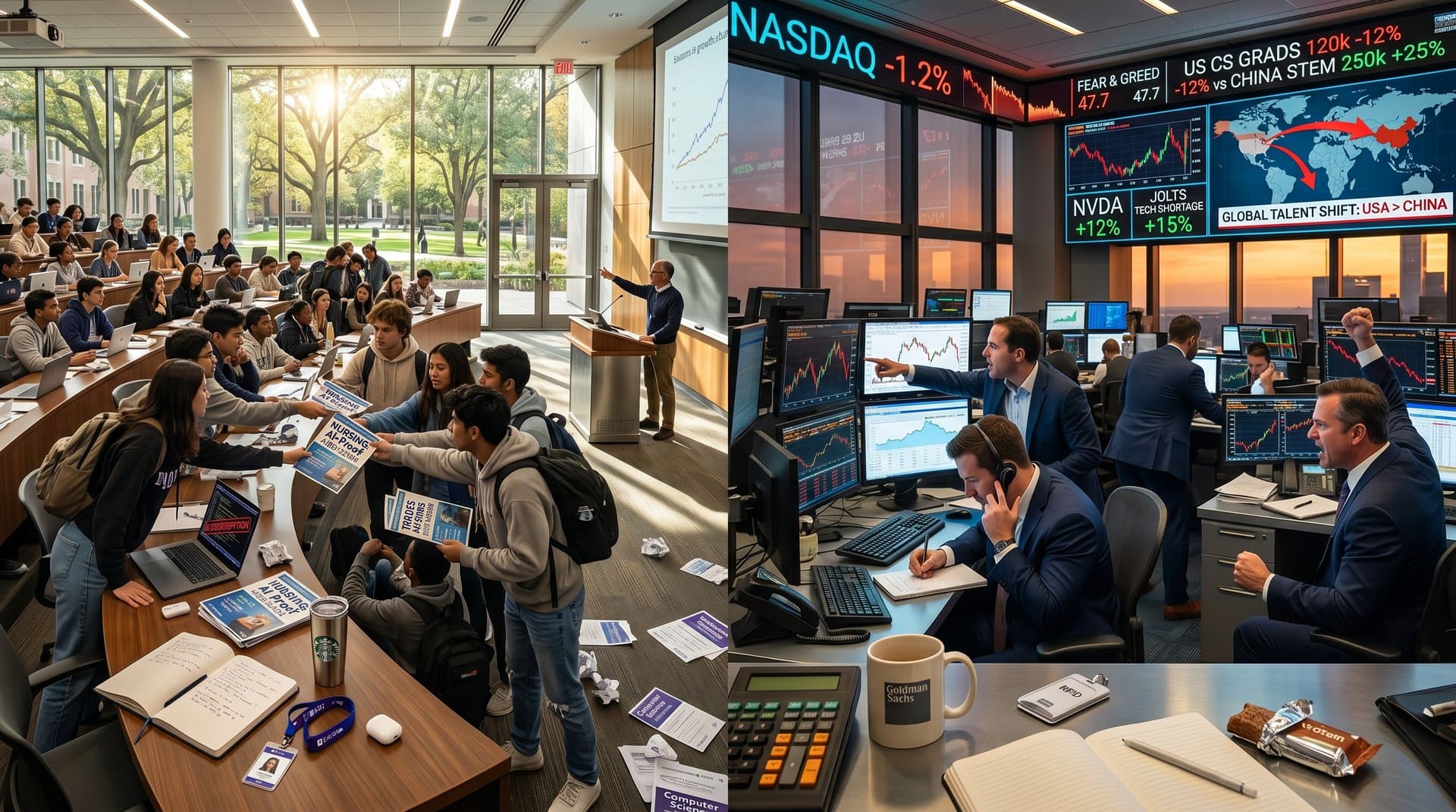
- Nursing enrollment jumps 18% YoY (NCES, fall 2024).
- Computer science falls 12% (U.S. News, 2024).
- China AI/STEM students rise 25% (Ministry of Education, 2024).
US students enrolled 18% more in AI-proof majors like nursing for fall 2024 (National Center for Education Statistics, NCES). Computer science plunged 12% (U.S. News & World Report, 2024). This shift squeezes tech talent pipelines.
Bitcoin traded at USD 77,603, down 0.5% in 24 hours to 14:00 UTC April 9, 2025 (CoinMarketCap). Ethereum reached USD 2,319.88, off 0.4% same period.
Tech Enrollment Drop Fuels Labor Shortages
NCES reports nursing majors rose 18% year-over-year from fall 2023 to 2024, seasonally unadjusted. Trade programs climbed 14%. Computer science dropped 12%; engineering fell 5% at elite universities like Harvard (university filings, fall 2024).
The Federal Reserve's JOLTS survey recorded tech job openings up 15% quarter-over-quarter in Q1 2025, seasonally adjusted (BLS, April 2, 2025 release). Google reported 20% longer hiring timelines for AI engineers (Bloomberg, February 2025).
Labor scarcity drives wage inflation through tighter supply-demand dynamics. Silicon Valley software engineers earned 8% higher annualized salaries (Bureau of Labor Statistics, March 2025). Nasdaq Composite (^IXIC) shed 1.2% on April 9 amid shortage fears (Nasdaq.com).
Fewer graduates slow AI development cycles. Firms face delays in model training and deployment, crimping productivity gains. NCES forecasts a 22% US AI workforce gap by 2028 if trends persist.
China Builds AI Talent Lead
China added 250,000 AI and STEM students in 2024, up 25% year-over-year (Ministry of Education). The US graduates only 120,000 computer science majors annually (NCES, 2024).
Reuters projects China overtaking the US in global AI PhDs by 2026 (January 15, 2026). US chip export restrictions cut China's NVIDIA imports 40% from 2023 to 2024 (US Commerce Department). Huawei accelerates domestic semiconductor output, targeting self-sufficiency.
This talent edge bolsters China's export competitiveness. Yuan appreciated 2.5% against USD in Q1 2025 (Bloomberg FX data, March 31 close). US Dollar Index (DXY) declined 1.1% on perceived innovation lags.
Geopolitical tensions amplify transmission: reduced US tech exports to China equal 2.5% of bilateral trade volume (US Census Bureau, 2024). Beijing's response channels FDI into AI chips, up 35% YoY.
Markets React to US Tech Crunch
XRP stood at USD 1.42, down 0.7% in 24 hours; BNB at USD 626.77, off similarly (CoinMarketCap, April 9). Fear & Greed Index at 47 balances AI hype against supply risks.
S&P 500 technology sector rose 5% year-to-date through April 9 (S&P Dow Jones Indices). Talent scarcity boosts profit margins; NVIDIA (NVDA) gained 12% in the past month despite volatility.
Bloomberg estimates a 10-15% US AI developer deficit by 2027 (February 10, 2026). Federal Reserve Beige Book (April 2025) noted tight tech labor in eight districts, pressuring regional growth.
Shortages ripple to corporate earnings: tech firms report 12% higher R&D costs (FactSet, Q1 2025 earnings calls). This erodes margins unless offset by pricing power.
Yield Curve Steepens on Wage Pressures
Tech wage gains transmit to core inflation via service costs. US core PCE inflation climbed 0.3% month-over-month in March 2025 (Bureau of Economic Analysis). ECB watches for global spillovers.
10-year Treasury yield closed at 4.35% on April 9 (Treasury.gov), steepening the curve 25 basis points in Q1 2025. Steeper curves signal growth optimism amid Fed pause expectations.
Crypto AI tokens seek scarce developers. Solana DeFi TVL jumped 30% year-to-date (DefiLlama, April 9). USDT stablecoin pegged at USD 1.00.
Labor tightness could add 0.5% to US wage inflation (Oxford Economics, 2025 forecast), challenging 2% PCE target and shaping Fed's May path.
Forward Outlook
NCES fall 2025 data tests shift durability. Tech giants plan 15% entry-level raises (McKinsey Global Institute, 2025). China aims for 20% global AI talent share.
Markets eye Fed May meeting: 65% odds of rate hold (CME FedWatch Tool, April 9). Bitcoin above USD 77,000 supports bulls if shortages spur productivity. Persistent gaps risk 0.4% drag on 2025 US GDP growth.
Frequently Asked Questions
Why are US students picking AI-proof majors?
Fears of AI displacing tech jobs drive shifts. Nursing up 18% (NCES fall 2024); computer science down 12% (U.S. News).
How do major shifts cause tech shortages?
JOLTS shows tech openings +15% QoQ (Fed, Q1 2025). Wages up 8% (BLS March 2025); Nasdaq dips on scarcity.
How does China gain from US trends?
250k AI/STEM enrollments +25% YoY (Ministry 2024). Leads PhDs by 2026 (Reuters); export curbs boost Huawei chips.
What do markets show?
Fear & Greed 47 (CNN Apr 9). BTC USD 77,603 (-0.5%); S&P tech +5% YTD on margins.