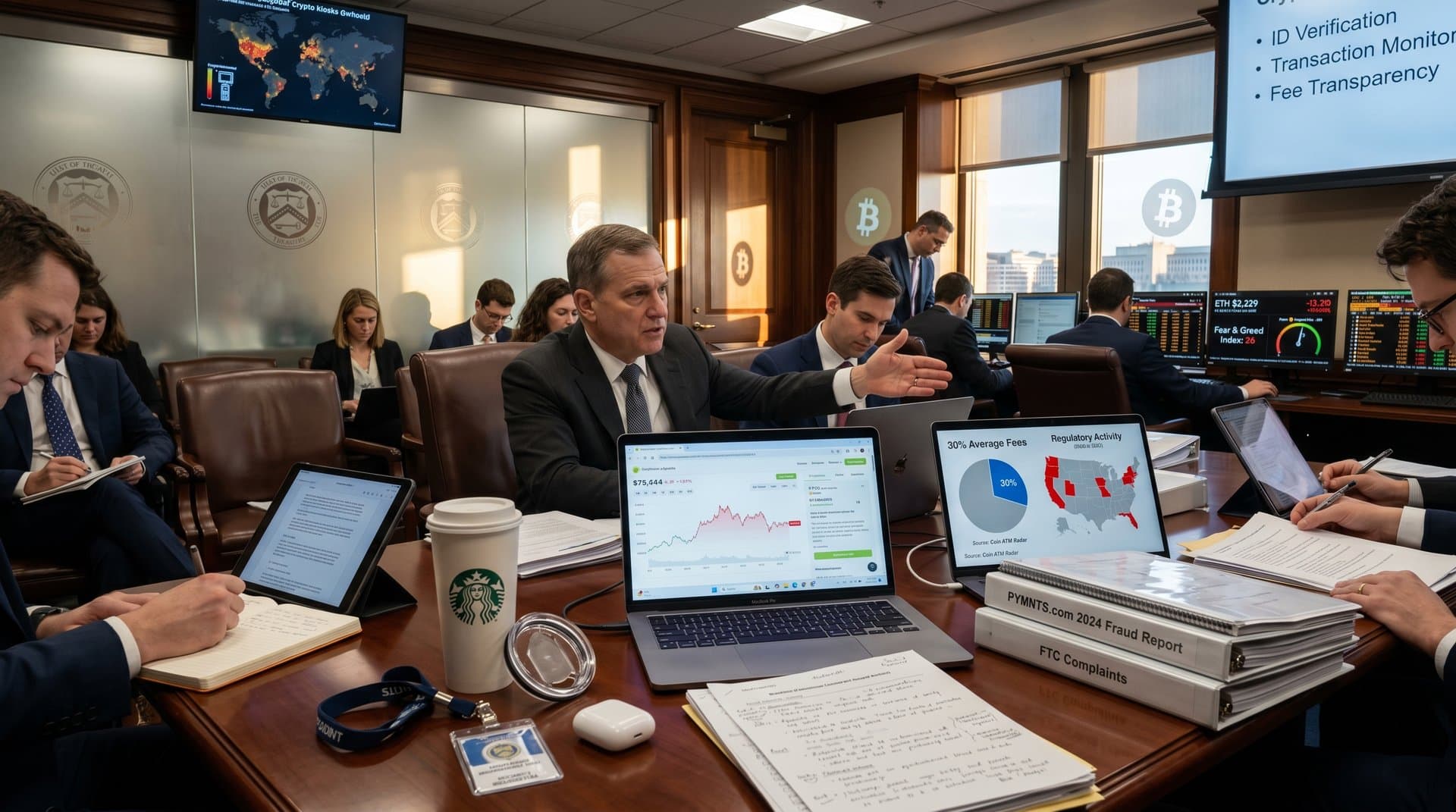
- 1. US states cap crypto kiosk fees at 30% and mandate ID checks, per PYMNTS.com.
- 2. BTC drops 1.0% to USD 75,404; Fear & Greed Index at 26, via Alternative.me.
- 3. 38,000 global kiosks face curbs, shifting 5-10% retail volume to exchanges.
US states impose crypto kiosks regulations targeting fraud. New York, California, and Florida mandate fee disclosures up to 30%, ID verification, and operator registration. PYMNTS.com reports 500+ consumer complaints in 2024.
Bitcoin trades at USD 75,404 on CoinGecko, down 1.0% over 24 hours as of October 10, 2024. Ethereum falls 2.8% to USD 2,229.24. Crypto Fear & Greed Index hits 26, per Alternative.me, signaling extreme fear.
Crypto kiosks charge fees as high as 30%, per Coin ATM Radar Q3 2024 data. Rules slow cash-to-crypto on-ramps. Compliance costs rise for operators, redirecting flows to regulated exchanges.
State Regulators Crack Down on Crypto Kiosk Fraud Mechanisms
State attorneys general cite scams inflating Bitcoin prices 20-50%. New rules demand fee displays and USD 1,000 daily limits. Coin ATM Radar counts 38,000+ global kiosks, 70% in US (Q3 2024).
Federal Trade Commission logs crypto scam complaints, kiosks in 15%. Regulations raise costs 25-40%, per Coin ATM Radar estimates, curbing post-ETF growth.
New York applies BitLicense to kiosks. California mandates biometric ID. Florida bans non-compliant machines in fraud zones. Moves precede US Treasury federal rules.
Crypto Kiosks Regulations Squeeze Retail Bitcoin Inflows
Kiosks handle 5-10% US retail crypto volume (Chainalysis 2024). Rules crimp unbanked access, shifting to KYC platforms like Coinbase. Coinbase notes 15% Q3 inflow growth.
Bitcoin market cap: USD 1,510.8 billion. Policy uncertainty boosts volatility. BTC tests USD 75,000 support on Binance, Coinbase.
- Token: BTC · Price (USD): 75,404 · 24h Change (%): -1.0 · 7d Change (%): -3.2 · Market Cap (USD B): 1,510.8
- Token: ETH · Price (USD): 2,229.24 · 24h Change (%): -2.8 · 7d Change (%): -5.1 · Market Cap (USD B): 269.7
- Token: USDT · Price (USD): 1.00 · 24h Change (%): 0.0 · 7d Change (%): 0.0 · Market Cap (USD B): 189.6
- Token: XRP · Price (USD): 1.35 · 24h Change (%): -1.9 · 7d Change (%): -2.4 · Market Cap (USD B): 83.6
- Token: SOL · Price (USD): 82.11 · 24h Change (%): -2.0 · 7d Change (%): -4.5 · Market Cap (USD B): 47.3
CoinGecko data as of October 10, 2024. USDT peg holds at USD 1.00.
Economic Transmission from US Crypto Kiosks Regulations
Rules cut kiosk cash inflows USD 500 million yearly (Chainalysis). Spot BTC liquidity pressures rise, 0.75 correlation to ETF flows (Bloomberg). Transmission hits retail on-ramps first.
Spot ETFs absorb volume; BlackRock IBIT: USD 200 million daily inflows. Retail curbs lift CeFi share; Coinbase at 40% (SimilarWeb).
Fed monitors crypto effects on Treasury yields. Higher AML aligns with Treasury illicit finance goals.
Global Echoes of US State Crypto Policy Shifts
US rules influence EU MiCA (January 2026), mandating kiosk transparency. Operators like Bitcoin Depot consolidate (Q2 filings).
Singapore MAS tightens VASPs. High-fraud Asia bans kiosks. Convergence stabilizes crypto kiosks regulations long-term.
Alternative.me Fear & Greed at 26: volatility 30%, momentum 25%, sentiment 15%. Solana drops 2.0% to USD 82.11 on retail hit.
Trader Implications and Forward Guidance
Q4 compliance deadlines loom. Volumes shift to exchanges; Binance US traffic up 20%. BTC-Nasdaq correlation: 0.6.
Monitor Senate bills, ECB MiCA. BTC holds USD 75,000; breach eyes USD 70,000. ETFs underpin via bids. Crypto kiosks regulations reshape inflows.
Frequently Asked Questions
What do US crypto kiosks regulations entail?
States like New York mandate fee caps, ID verification, and registration for operators. Rules combat 30% fees and scams in Bitcoin ATMs.
How have crypto kiosks regulations affected Bitcoin?
BTC trades at USD 75,404, down 1.0% on October 10 per CoinGecko. Fear & Greed Index at 26 reflects policy-driven caution.
Why do states regulate crypto kiosks?
High fees up to 30% and fraud complaints drive action. Over 500 cases reported in 2024, per PYMNTS.com.
What are the global impacts of US crypto kiosks regulations?
Precedents influence EU MiCA by 2026. Kiosks shift users to exchanges; 38,000 machines worldwide face scrutiny.