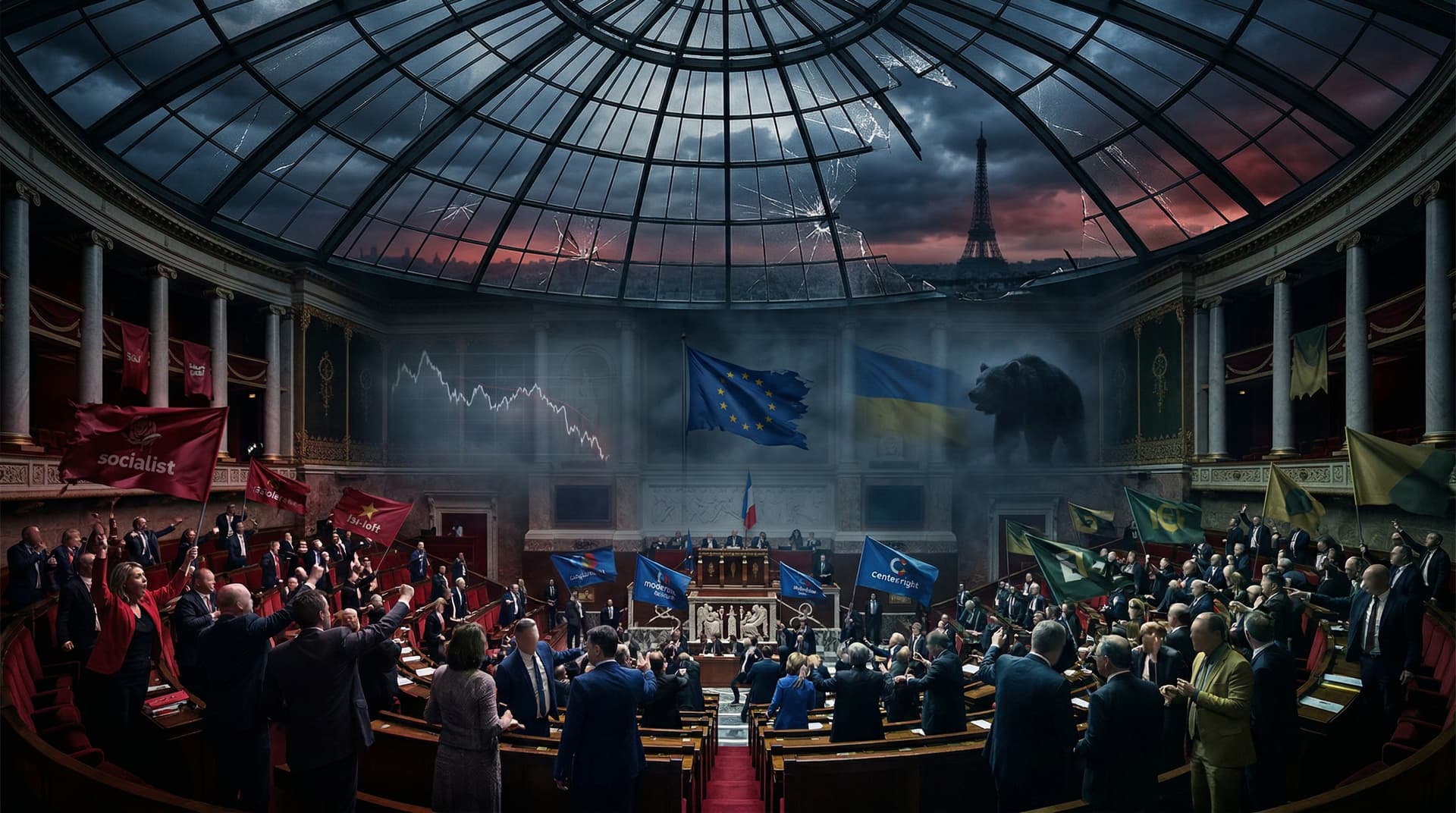
In a political bombshell that has reverberated across European capitals and global markets, France's snap legislative elections on July 7, 2024, produced a deeply fragmented National Assembly. The New Popular Front (NFP), a left-wing alliance cobbled together in haste, clinched 182 seats, edging out President Emmanuel Macron's centrist Ensemble coalition with 168 and relegating Marine Le Pen's National Rally (RN) to third place with 143. With no bloc reaching the 289 seats needed for a majority in the 577-seat chamber, France faces a hung parliament not seen in decades, injecting profound uncertainty into the heart of the European Union.
The Road to Chaos
The elections were triggered by Macron's high-stakes gamble on June 9, when he dissolved parliament after a bruising defeat in European Parliament polls. The first round on June 30 saw RN surge to 33% of the vote, buoyed by voter frustration over inflation, migration, and Macron's perceived arrogance. Macron's camp and the left swiftly formed a 'republican front' to block the far-right in the runoff, leading to tactical voting that flipped the script. Turnout hit 67%, the highest in decades, underscoring the election's gravity.
Mélenchon’s NFP, uniting socialists, greens, and communists, campaigned on generous spending, pension rollbacks, and tax hikes on the wealthy—policies that spooked bond markets. Macron's forces held the center but lost ground, while RN, despite first-round dominance, suffered from vote-splitting and establishment pacts. By July 8, Prime Minister Gabriel Attal resigned, paving the way for consultations. On July 10, Macron named Michel Barnier, the former Brexit negotiator and a conservative stalwart, as the new premier tasked with forging a government amid razor-thin margins.
Markets in Turmoil
Financial markets, already jittery from the first round, reacted with volatility. The CAC 40 index plunged 1.4% on July 1 before recovering partially, while the euro weakened 0.5% against the dollar. French 10-year bond yields spiked to 3.2%, signaling investor fears over fiscal profligacy. The NFP's manifesto promises €150 billion in new spending, clashing with the EU's fiscal rules capping deficits at 3% of GDP—France's is already at 5.5%.
Broader European equities dipped, with Germany's DAX falling 0.8% as Berlin frets over Paris's reliability. Globally, the UK's FTSE 100, buoyed by Labour's landslide on July 4, provided contrast, rising 1.2% on Starmer's pro-business pledges. Investors now eye France's €3 trillion debt pile; a ratings downgrade from agencies like Moody's looms if gridlock persists. Tech-heavy Nasdaq futures held steady, but European semiconductor firms like ASML felt the chill from potential subsidy cuts.
Geopolitical Fault Lines Exposed
France's paralysis carries explosive implications for geopolitics. Macron, a hawk on Ukraine, has championed arms deliveries and EU strategic autonomy. The NFP harbors doves like Jean-Luc Mélenchon, who has questioned NATO and Israel, potentially diluting Paris's support for Kyiv. With €3 billion in annual French aid at stake, any wobble could embolden Putin, especially as NATO's July 9-11 Washington summit pledged €40 billion but relied on European fillers.
EU cohesion frays too. Germany’s Scholz government, facing its own September vote, resents Macron's fiscal adventurism, stalling next-gen EU budget talks. On China, France's EV tariff push (up to 38% provisional duties in June) faces scrutiny; a leftist tilt might soften trade hawks, benefiting Beijing amid US election uncertainties. Migration, RN's forte, remains unresolved—border chaos could strain Schengen and fuel populism across the bloc.
Transatlantic ties? Macron's Indo-Pacific pivot, including AUKUS criticism, might stall under coalition pressures. Barnier's pro-EU conservatism offers stability, but his reliance on Macronists and select Republicans risks collapse by autumn's budget vote.
Business and Macro Outlook
For corporates, uncertainty reigns. LVMH and Airbus stocks wavered, fearing spending sprees inflating costs. Tech investors watch France's €2.5 billion AI plan; political limbo delays rollout. Macro headwinds include ECB's July 18 meeting—Christine Lagarde may pause cuts amid French risks, contrasting Fed's dovish July 11 CPI data (3% YoY).
| Key Risks | Potential Impact | |-----------|------------------| | No-confidence vote by Sept | Government fall, snap polls | | Budget impasse | EU infringement, austerity | | Ukraine aid cut | Geopolitical escalation | | Eurozone contagion | Higher yields, slower growth |
Path Forward
Barnier must thread the needle: appease left on social spending, centrists on reforms, right on security. A minority government or 'everyone against RN' pact is likely, but fragility abounds. Macron, constitutionally barred from dissolving again until 2025, limps on as a lame duck.
Globally, this underscores populism's march—echoing UK, Dutch gains. For markets, hedging French exposure is prudent; for geopolitics, Europe's pivot point wobbles. As of July 12, vigilante trading and diplomatic maneuvering define the new normal in Paris, with ripple effects to Davos and beyond.
Word count: 952