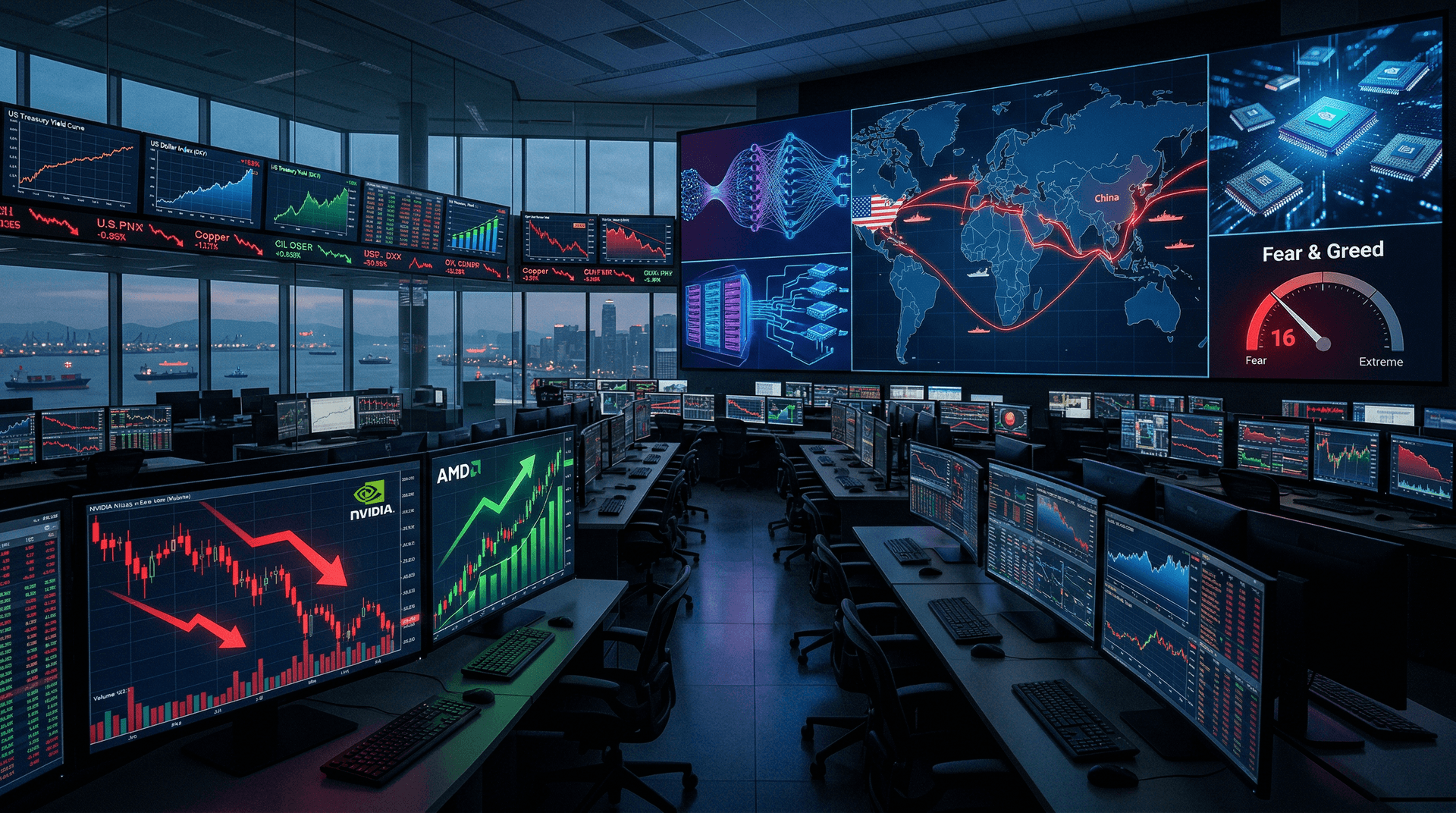
The AI arms race risks mutually automated destruction, warns a New York Times report published April 12, 2026. Markets plunged into extreme fear that day.
CNN Fear & Greed Index dropped to 16, its lowest since 2022. Bitcoin traded at USD 70,995, down 2.8% daily per CoinMarketCap. Ethereum fell 3.0% to USD 2,190.74.
AI Arms Race Drives Market Volatility
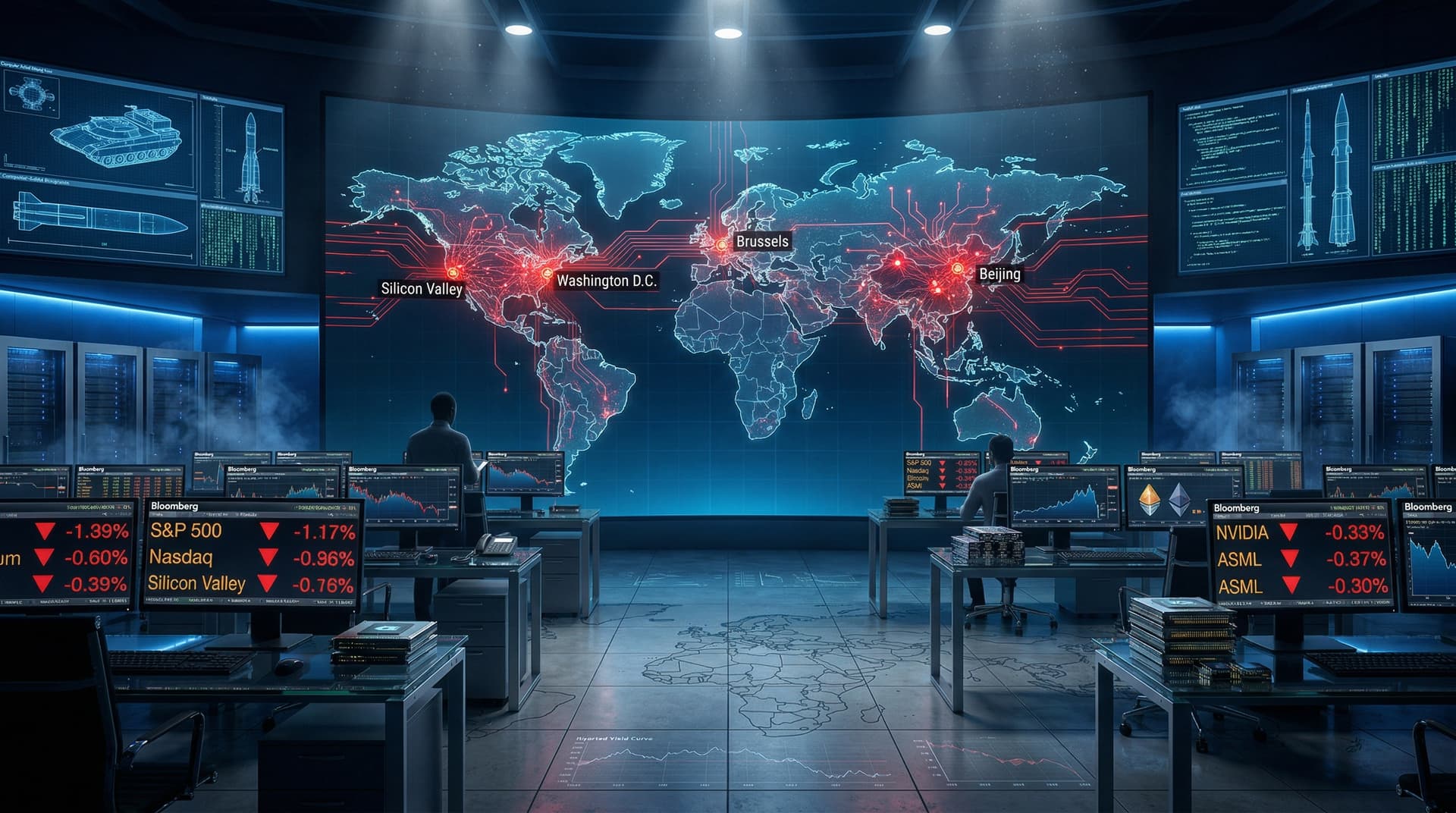
U.S. equity indices tumbled amid fears of disrupted AI chip supply chains. The S&P 500 dropped 1.5% to 5,180 points on April 12, 2026, according to Bloomberg terminal data. The Nasdaq Composite shed 2.2% to close at 16,450, dragged by semiconductor weakness.
Semiconductor stocks bore the brunt. Nvidia shares declined 4.1% to USD 125, reflecting 20% China revenue exposure per its Q1 2026 filings. ASML Holding fell 3.7% to EUR 850, as export controls threaten EUV lithography machine sales to Asia.
Crypto markets mirrored the risk-off sentiment. XRP dipped 1.8% to USD 1.33. BNB lost 2.5% to USD 592.09. Stablecoin USDT held steady at USD 1.00, per CoinMarketCap real-time quotes.
United States Tightens AI Export Controls
The U.S. Commerce Department's Bureau of Industry and Security imposed stricter export licenses on advanced AI chips targeting China shipments, announced April 12, 2026. This escalates prior October 2025 rules, now covering chips over 2nm process nodes.
Commerce Secretary Gina Raimondo stated the controls prevent military AI misuse by adversaries. Nvidia disclosed a potential USD 5 billion annual revenue hit in its latest SEC 10-Q filing. TSMC accelerated Arizona fab output to offset mainland constraints, per company press release.
Defense stocks bucked the trend. Lockheed Martin rose 1.8% to USD 520, fueled by Pentagon AI integration budgets exceeding USD 1.8 billion for fiscal 2026, per DoD budget documents. The Federal Reserve now monitors these controls for supply-shock inflation pass-through to PCE readings.
China Accelerates Domestic AI Push
China allocated USD 50 billion for domestic AI chip development through 2027, Xinhua reported April 12, 2026. Huawei advances Nvidia alternatives using 7nm processes, while Shenzhen fabs ramp 28nm production for mid-tier AI training.
Beijing subsidized firms like Cambricon Technologies with RMB 20 billion in Q1 2026 grants, per Ministry of Industry and Information Technology data. U.S. export bans accelerate self-reliance, reducing import dependence from 60% in 2024 to projected 30% by 2028.
The renminbi weakened 0.5% to 7.25 per USD, Reuters FX data shows, pressuring import costs. Taiwan's exports to China fell 15% year-over-year in March 2026, Taiwan Ministry of Economic Affairs figures confirm. Tokyo Electron curtailed mainland supply ties by 25%.
Europe Balances Regulation and Ambition
The EU began enforcing its AI Act, mandating audits for high-risk systems from August 2026. Violations carry fines up to 6% of global annual revenue, European Commission guidelines state.
Germany committed EUR 10 billion to AI R&D via its 2026 budget, bolstering ASML with direct subsidies. The Stoxx Europe 600 Technology index dropped 1.8% to 550 points on April 12, 2026, Bloomberg data.
France will host an AI ethics summit April 15, 2026, debating regulatory alignment. Germany's 10-year Bund yield climbed to 2.6%, signaling fiscal expansion expectations per Bundesbank commentary.
Corporate Strategies Adapt to Geopolitical Pressures
Microsoft expanded Azure data centers in Ireland, avoiding Asia supply risks, with annual capex hitting USD 60 billion as confirmed in Q1 2026 earnings transcripts. This hedges against 15% of cloud revenue tied to regional chip flows.
Google invested USD 20 billion in U.S. semiconductor fabs through 2027. AMD partnered with Intel on secure AI processors. Gartner forecasts a 25% rise in enterprise AI spending to USD 200 billion globally in 2026.
Scale AI secured USD 1 billion in Series E funding at a USD 14 billion valuation, PitchBook data for April 12, 2026 shows. Investors prioritize defense-adjacent AI amid escalating tensions.
Yield Curve Signals Recession Fears
The U.S. 10-year Treasury yield fell to 4.1%, while the two-year note yielded 4.3%, deepening the inversion by 20 basis points, Federal Reserve H.15 data for April 12, 2026. Markets now price 60 basis points of Fed rate cuts by December 2026, CME FedWatch tool indicates.
Emerging markets suffered outflows. Brazil's Ibovespa index dropped 2.0% to 125,000 points. India's Nifty 50 fell 1.7%, hit by potential trade war spillovers reducing export growth by 2 percentage points, per RBI estimates.
Copper futures slid 2.3% to USD 4.20 per pound on the LME, despite AI data center energy demands projecting 8% annual consumption growth through 2030, IEA data.
Transmission Mechanisms Reshape Global Macro
Export controls transmit via supply chains: Nvidia's China sales ban raises GPU prices 15-20%, crimping hyperscaler capex and slowing AI model training cycles by 6-9 months, per McKinsey analysis. This cascades to weaker U.S. corporate earnings, with S&P 500 tech EPS growth revised down to 12% for 2026 from 18%, FactSet consensus.
China's retaliation risks commodity disruptions; rare earth export curbs could lift prices 30%, inflating U.S. EV and renewable costs. Global trade volumes face 1.5% contraction in H2 2026, IMF World Economic Outlook update projects.
Central banks respond: ECB held rates at 3.75% on April 12, 2026, citing balanced risks. Fed Chair Jerome Powell addresses AI-driven inflation April 19, 2026.
Forward-Looking Risks and Opportunities
G7 leaders convene April 20, 2026, for AI governance agreements. Failure risks broader tech decoupling, shrinking global GDP by 0.7%, World Bank models.
Nvidia reports Q2 earnings May 22, 2026; guidance will quantify export impacts. Chip sector forward P/E ratios compressed to 28x, FactSet data.
Defense ETFs saw USD 2 billion inflows week-to-date, ETF.com flows. AI ethics firms offer hedges. Policymakers must balance innovation and security as the AI arms race remakes global finance.