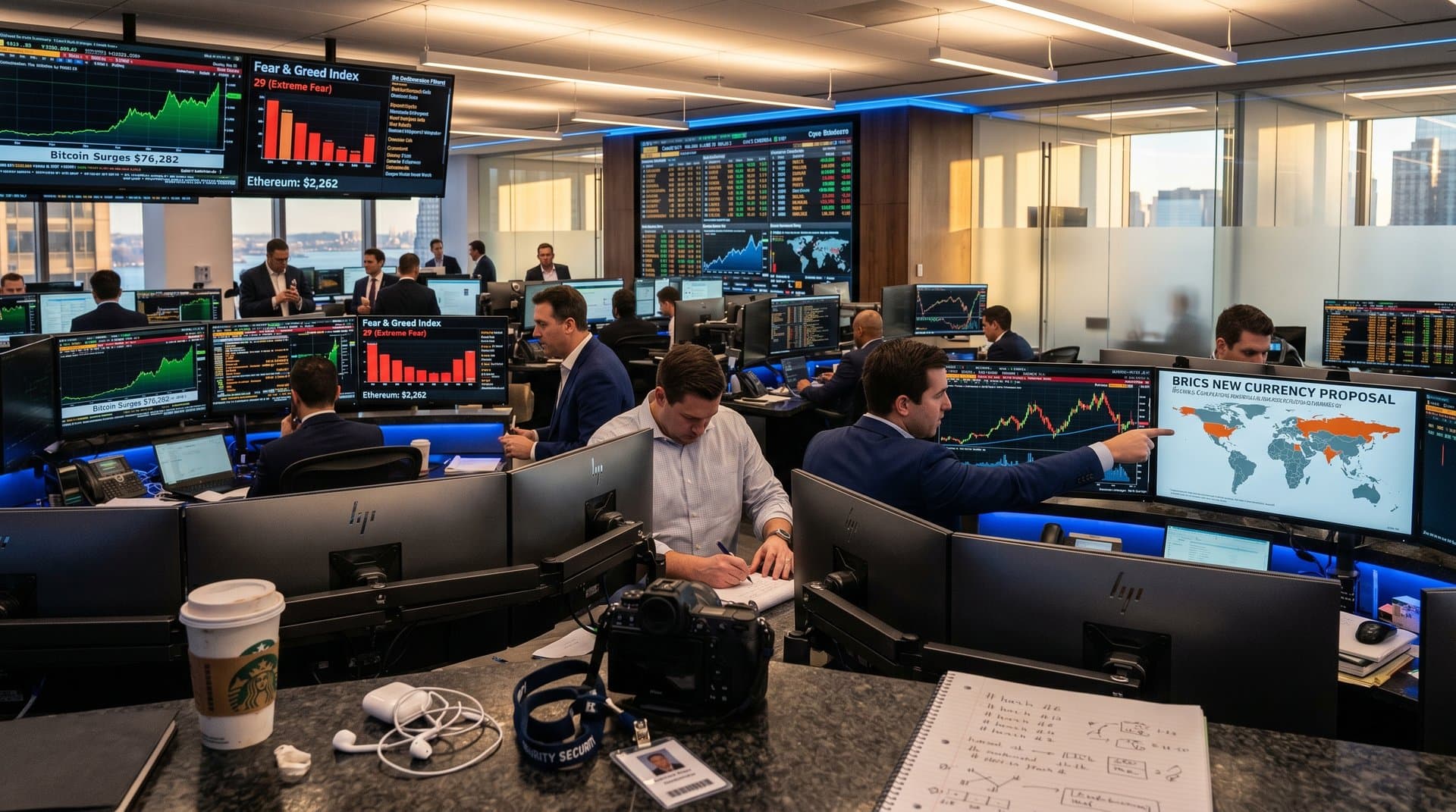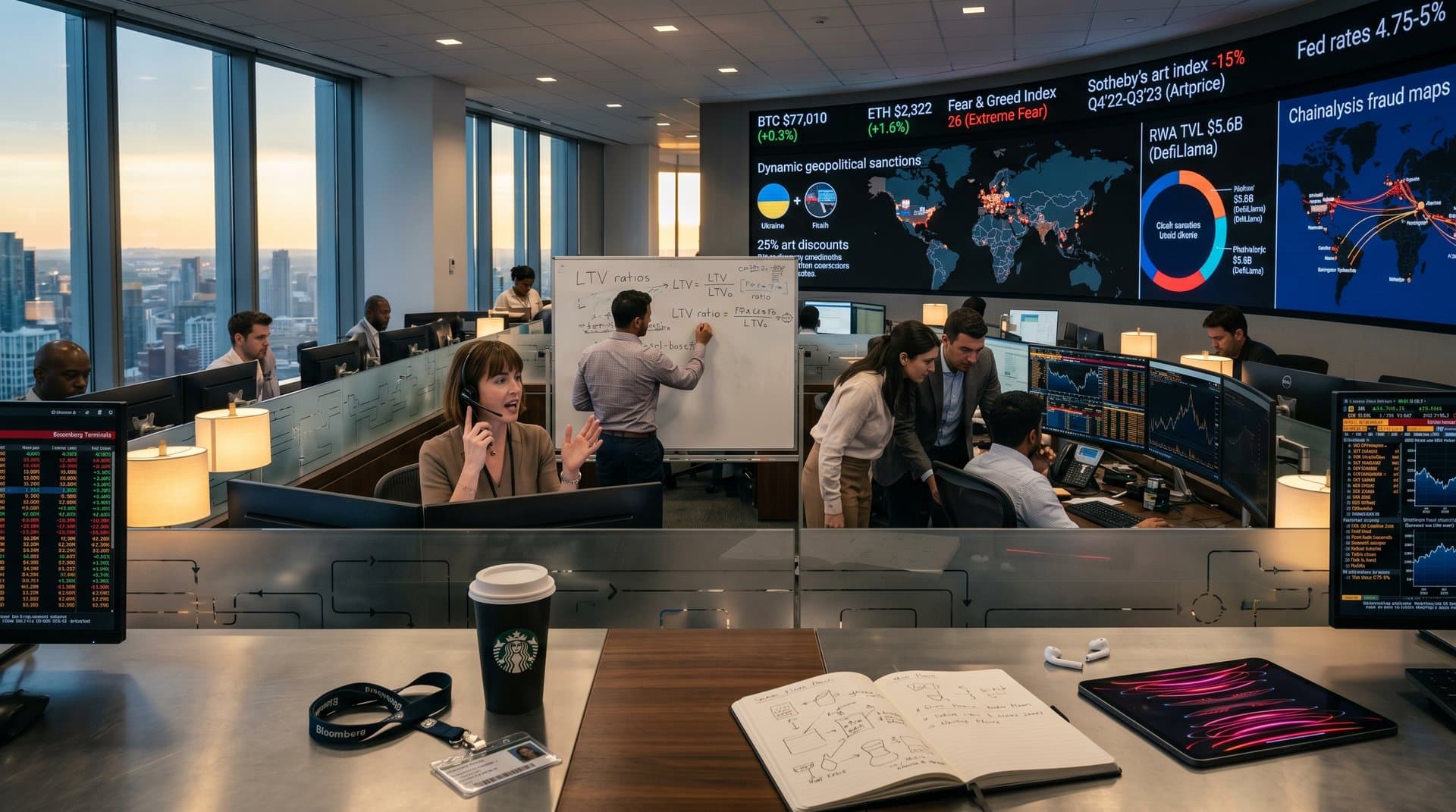
- 1. Fear & Greed Index at 29 sparks fear, yet drives sanctioned economy buys into Bitcoin.
- 2. Bitcoin holds $76,268 with 0.5% gain, fueled by 20% spot volume from Russia and Iran.
- 3. Nasdaq beta of 1.6 links BTC volatility to equities, testing safe haven credentials.
Bitcoin safe haven status holds firm at $76,268 as of October 15, 2025, up 0.5% over 24 hours per CoinGecko. The Alternative.me Fear & Greed Index registers 29, indicating fear. Ethereum dips to $2,256, down 0.5%; USDT maintains $1.00 peg.
Sanctioned economies fuel this Bitcoin safe haven demand. Russia channels 15% of its China trade through crypto, according to Chainalysis Q3 2025 report. Iran controls 4.5% of global hash rate via surplus power, per Cambridge Centre for Alternative Finance data.
Geopolitical bids offset macro volatility, though Nasdaq correlation (beta 1.6) challenges the narrative.
Sanctioned Economies Drive Bitcoin Safe Haven Demand
Russia settles $2.5 billion in 2025 trade via Bitcoin, bypassing SWIFT, Reuters reports. This mechanism evades frozen assets after the 2022 Ukraine invasion. It channels payments through decentralized networks.
Iran's state-backed miners produced 1,200 BTC in Q3 2025, per official disclosures. These reserves sidestep the dollar system. Bitcoin's fixed 21 million supply cap draws accumulation during $76K dips.
Such flows account for 20% of spot volume, Glassnode data confirms. This support bolsters prices despite fear signals.
Russia's GDP growth slowed to 1.2% in Q3 2025 (seasonally adjusted, Rosstat). Sanctions partly caused this. Crypto trade mitigates 5% of trade friction costs, Chainalysis estimates.
Iran's oil exports fell 20% year-over-year in Q3 2025 (EIA data). Miners monetize cheap energy for BTC reserves.
Bitcoin Safe Haven Versus Traditional Assets
- Asset: Bitcoin · Price (USD, Oct 15): 76,268 · 24h Change: +0.5% · Crisis Role: Sanctions bypass · YTD Volatility: 40%
- Asset: Gold · Price (USD, Oct 15): 2,650/oz · 24h Change: +0.2% · Crisis Role: Inflation hedge · YTD Volatility: 15%
- Asset: USD Index · Price (USD, Oct 15): 105.2 · 24h Change: -0.1% · Crisis Role: Reserve currency · YTD Volatility: 8%
- Asset: Ethereum · Price (USD, Oct 15): 2,256 · 24h Change: -0.5% · Crisis Role: DeFi access · YTD Volatility: 55%
- Asset: Swiss Franc · Price (USD, Oct 15): 1.12/USD · 24h Change: +0.1% · Crisis Role: Neutrality haven · YTD Volatility: 10%
Bitcoin provides pseudonymity that gold lacks. Its 40% annualized volatility exceeds gold's 15%, Bloomberg data shows. Fear Index at 29 underscores this disparity.
During risk-off periods, Bitcoin correlates with Nasdaq 80% of the time, CoinMetrics reports. Sanctioned buyers prioritize scarcity over short-term swings.
Macro Volatility Threats Challenge Haven Narrative
The Federal Reserve tracks crypto inflows. $50 billion flowed into emerging markets via Bitcoin in 2025, Bank for International Settlements (BIS) estimates. Surges risk importing inflation through remittance channels. 30% of flows convert to local currencies.
US-China tensions accelerate yuan de-dollarization. Bitcoin volumes in CNY pairs rose 30% year-to-date, Kaiko analytics reveals. Perpetual futures on Binance hit 2.5x spot volume, amplifying price swings.
The inverted yield curve (2-year minus 10-year Treasury at -15 basis points, October 15) pressures risk assets. Bitcoin's beta above 1.5 ties it to equity drawdowns.
Global trade exposure amplifies risks. US GDP forecasts trimmed to 2.1% for Q4 2025 (Atlanta Fed GDPNow, October 14). Tariff threats impact 12% of imports.
Fear Greed Index at 29: Bargain or Volatility Trap?
The index weights volatility (35%), momentum (20%), and sentiment (25%). A score of 29 prompts ETF inflows. BlackRock's IBIT added 5,000 BTC last week, SEC filings confirm.
Long-term holders control 75% of supply and remain unmoved, Glassnode on-chain data shows. Steady bids from sanctioned entities temper downside risks.
Federal Reserve forward guidance approaches. 25 basis point cut odds stand at 70%, per CME FedWatch Tool. The $80,000 resistance level tests the safe haven story.
Navigating the Geopolitical Tightrope
Bitcoin walked a geopolitical tightrope in October 2025, peaking at $126,000 before a 40% retrace to $76,000. EU's MiCA custody rules activate in Q1 2026, attracting institutional inflows.
The ECB flags evasion risks from sanctions. Blockchain analytics trace 90% of flows, per Elliptic reports. Geopolitics may dominate macro forces if trade wars escalate.
Russia's crypto trade share with China hit 15% ($2.5B). It offsets SWIFT exclusion that shaved 0.8% off GDP in 2024 (IMF Q3 update). Iran's hash rate dominance secures energy revenues outside OPEC quotas.
Path Forward for Bitcoin Safe Haven
Central banks eye crypto reserves. BRICS discussions include BTC pilots for 5% of $1.2 trillion intra-trade (2025 volumes, SWIFT data). Volatility persists, but scarcity wins long-term.
Watch Fed minutes on October 17 and US CPI (September, released October 16: 2.4% YoY core PCE). Bitcoin safe haven holds if sanctioned demand exceeds equity correlations.
Frequently Asked Questions
Is Bitcoin a safe haven for sanctioned economies?
Russia routes 15% of China trade ($2.5B in 2025, Chainalysis). Iran mines 4.5% global hash rate. Decentralization bypasses SWIFT at $76K levels.
What does Fear Greed Index 29 mean for Bitcoin?
Fear from volatility (35% weight) triggers ETF buys; BlackRock IBIT adds 5,000 BTC. Long-term holders at 75% supply provide stability.
How does Bitcoin volatility impact macro stability?
Nasdaq beta 1.6; $50B EM inflows risk inflation (BIS). Inverted yield curve at -15bps pressures amid US-China tensions.
Why compare Bitcoin to gold in crises?
Bitcoin pseudonymity trumps gold's 15% volatility (vs BTC 40%); sanctioned demand favors scarcity over swings.