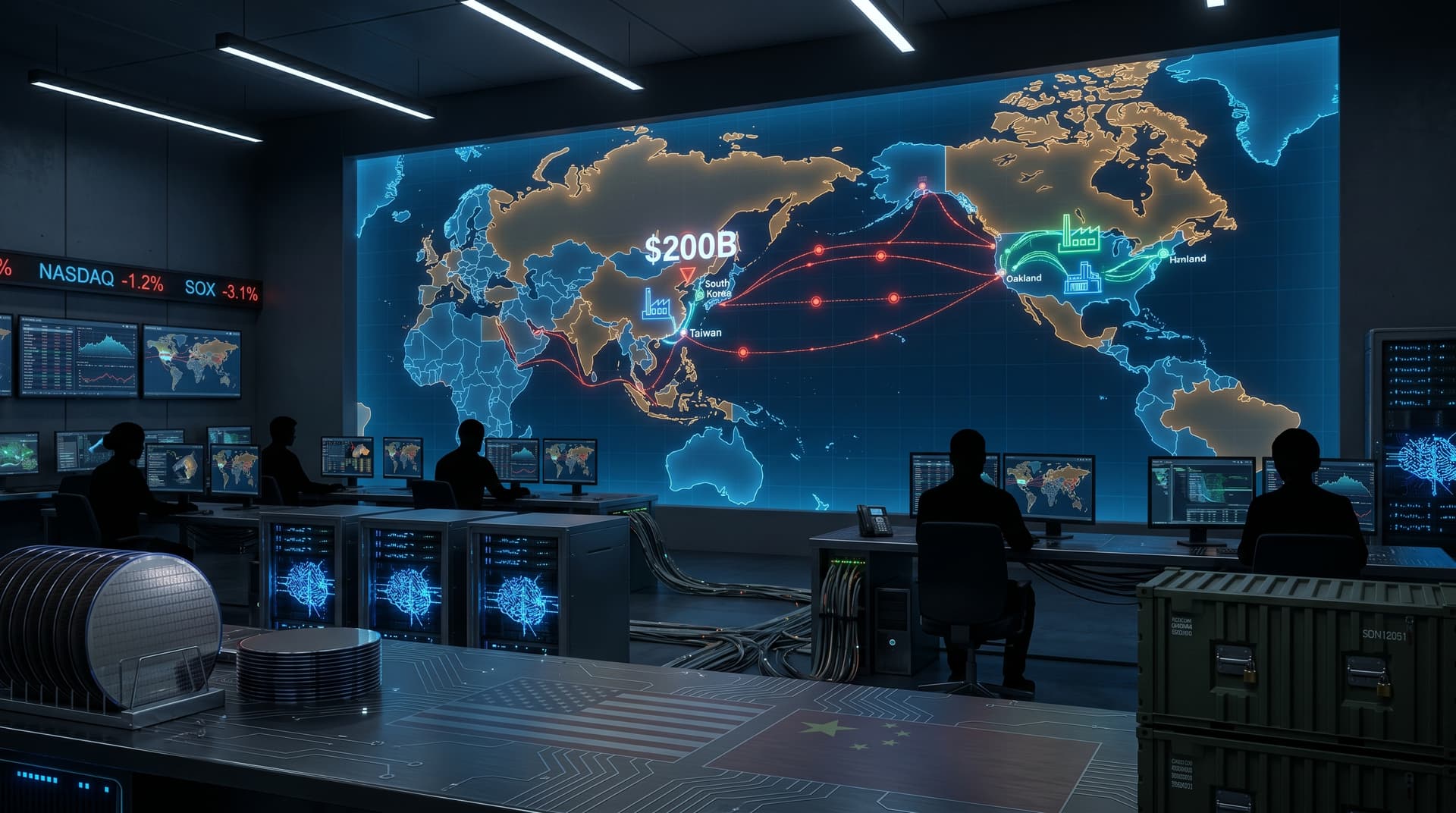
- US curbs target $200B USD AI chip trade with China.
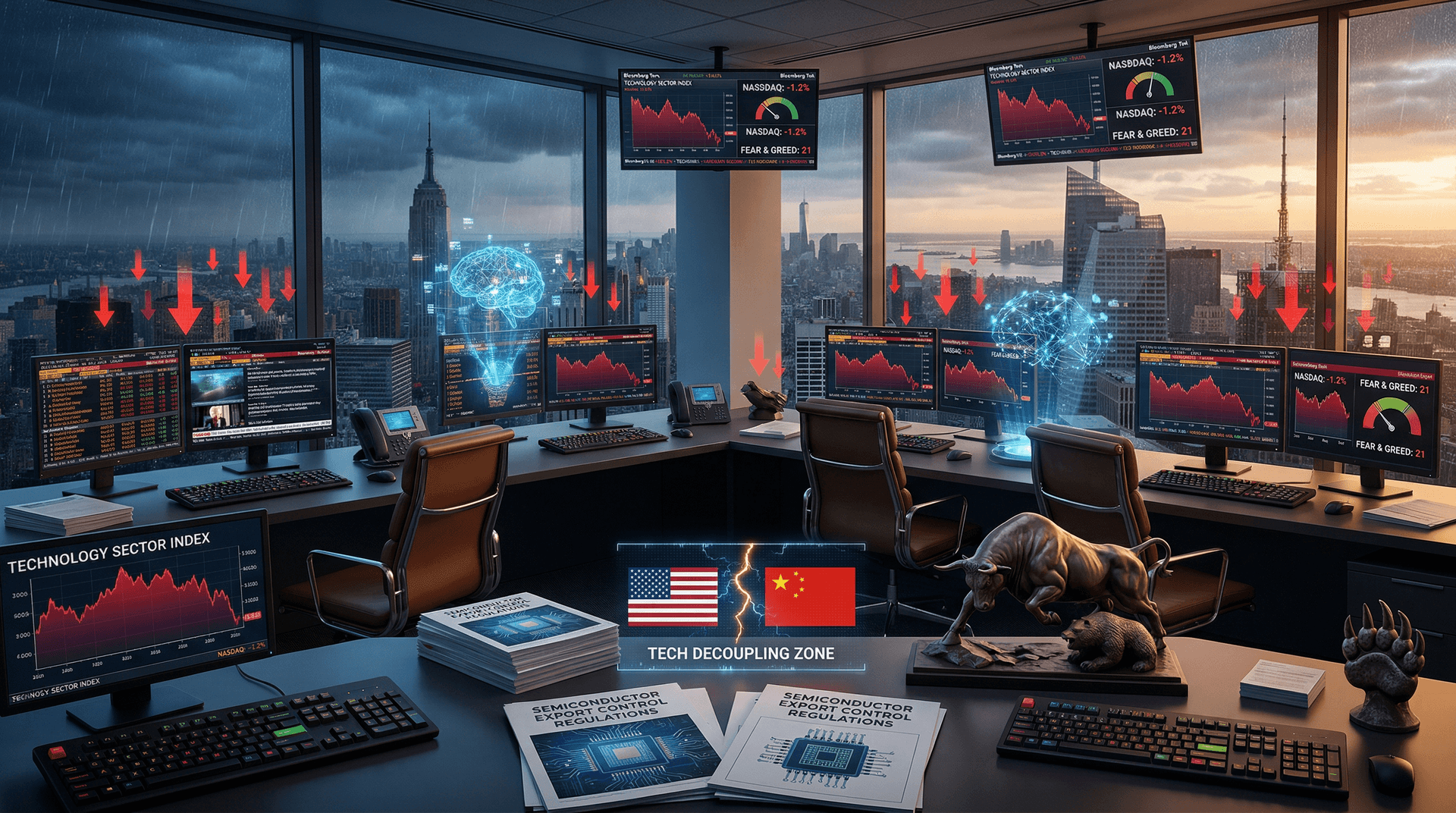
- Nasdaq futures drop 1.2%; SOX plunges 3.1%.
- Global AI compute grows 50% YoY; China capped at 10%.
US officials expanded AI chip export controls targeting $200 billion USD in annual semiconductor trade with China on April 14, 2026. Nasdaq 100 futures fell 1.2% pre-market (CME Group). The curbs block advanced AI processors and high-bandwidth memory (HBM) essential for large language models.
BIS Targets 37 Chinese Firms on Entity List
The Bureau of Industry and Security (BIS) added 37 Chinese entities to its Entity List. This denies them access to HBM chips critical for AI development.
"These steps safeguard US national security in the AI arms race," said Alan Estevez, Under Secretary for Industry and Security at the US Department of Commerce, in a BIS press release.
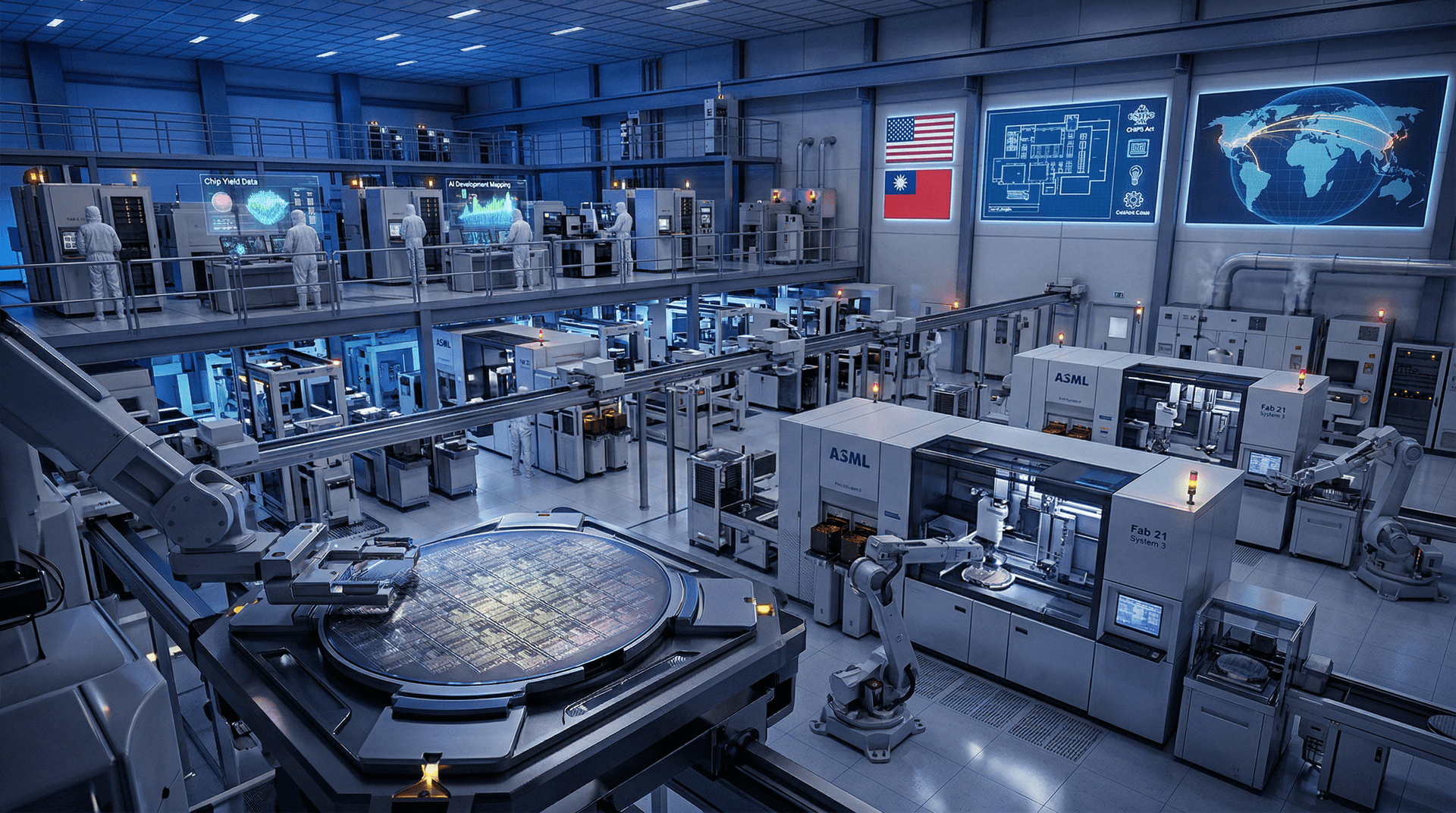
Nvidia anticipates a 15% cut in China sales for 2026 (Goldman Sachs estimates). These curbs hit Nvidia's data center revenue, which relies on China for 20% of shipments. TSMC (TWSE:2330) shares dropped 2.8% in Taipei on April 14. TSMC commands 90% of global advanced-node market share (Semiconductor Industry Association Q1 2026 data).
China Pushes AI Chip Self-Reliance
China's Ministry of Commerce vowed retaliation. Beijing accelerates Made in China 2025, aiming for 70% AI chip self-sufficiency by 2030.
Huawei's Ascend 910C delivers 40% better performance than prior models. Monthly production reaches 1 million units (Xinhua). This shift reduces reliance on US tech, pressuring global pricing.
Sam Bresnick of Inkstick warned: "AI geopolitics now splinters the $1.5 trillion USD semiconductor market cap."
Semiconductor Equities Plunge on Revenue Fears
The S&P 500 IT sector (XLK ETF) shed 1.5% on April 14 (Bloomberg). The Philadelphia Semiconductor Index (SOX) plunged 3.1%—its worst drop since Q1 2025.
Supply fears cascade through earnings: lost China volumes erode 10-15% of semi firms' revenue (analysts). Gregory C. Allen, Wadhwani Chair at CNAS, quantified: "Curbs elevate US-China decoupling costs to 2% of global GDP, versus IMF 2025 baseline."
USD/CNY climbed 0.8% to 7.25 as trade tensions boost dollar safe-haven flows. The PBOC instructed state banks to support the yuan.
Supply Chains Pivot to US Allies
Companies reroute production amid curbs. Samsung commits $17 billion USD to Texas fabs (company filings).
Intel breaks ground on Ohio plants with $8.5 billion USD from CHIPS Act funds. Japan's Rapidus targets 2nm chips by 2027, backed by ¥330 billion JPY ($2.2 billion USD) government aid.
These shifts transmit costs: fab construction inflates capex by 20-30% (Chris Miller, Tufts Fletcher School). He estimates "$100 billion USD in annual supply relocations."
Global AI compute capacity surged 50% year-over-year in Q1 2026 (Epoch AI data). China's share slips to 10% from 20% in 2025, tightening worldwide supply.
Central Banks Monitor Inflation Transmission
Fed Chair Jerome Powell highlighted curbs risks ahead of Jackson Hole. AI hardware shortages push core PCE inflation to 2.7% in March 2026 (Bureau of Labor Statistics).
The mechanism: constrained chips raise server costs, feeding into corporate prices and sticky services inflation. BOJ intervened in JPY after Nikkei dropped 2.4% on April 14. Yield curve control now contends with semi volatility.
CNN Fear & Greed Index hit 21 (Extreme Fear). BTC closed at $74,382 USD (+4.7%), ETH at $2,369.75 USD (+8.1%) (CoinMarketCap, April 14).
Corporates Adapt Revenue Strategies
Nvidia CEO Jensen Huang forecasts 20% revenue growth excluding China. The firm pivots to UAE and Saudi sovereign AI deals.
AMD reported Q1 2026 data center revenue of $3.5 billion USD, up 80% year-over-year (earnings call).
Broadcom inks $10 billion USD AI accelerator deal with TSMC over three years.
Forward Policy and Investment Signals
Treasury Secretary Janet Yellen testifies April 16 on coordinated allied controls. The EU advances a €35 billion EUR chip fund via the AI Act.
BlackRock's SOXX ETF records $500 million USD weekly outflows. Goldman Sachs recommends overweight Japan and Taiwan; SOX price target 5,200 by Q3 2026.
Morgan Stanley shifts neutral on China tech, citing 25% valuation downside risks.
Key Policy Milestones in AI Geopolitics
G7 June summit debates unified chip export regime. TSMC Q2 earnings on July 18 will reveal 20% AI revenue growth trajectory amid curbs.