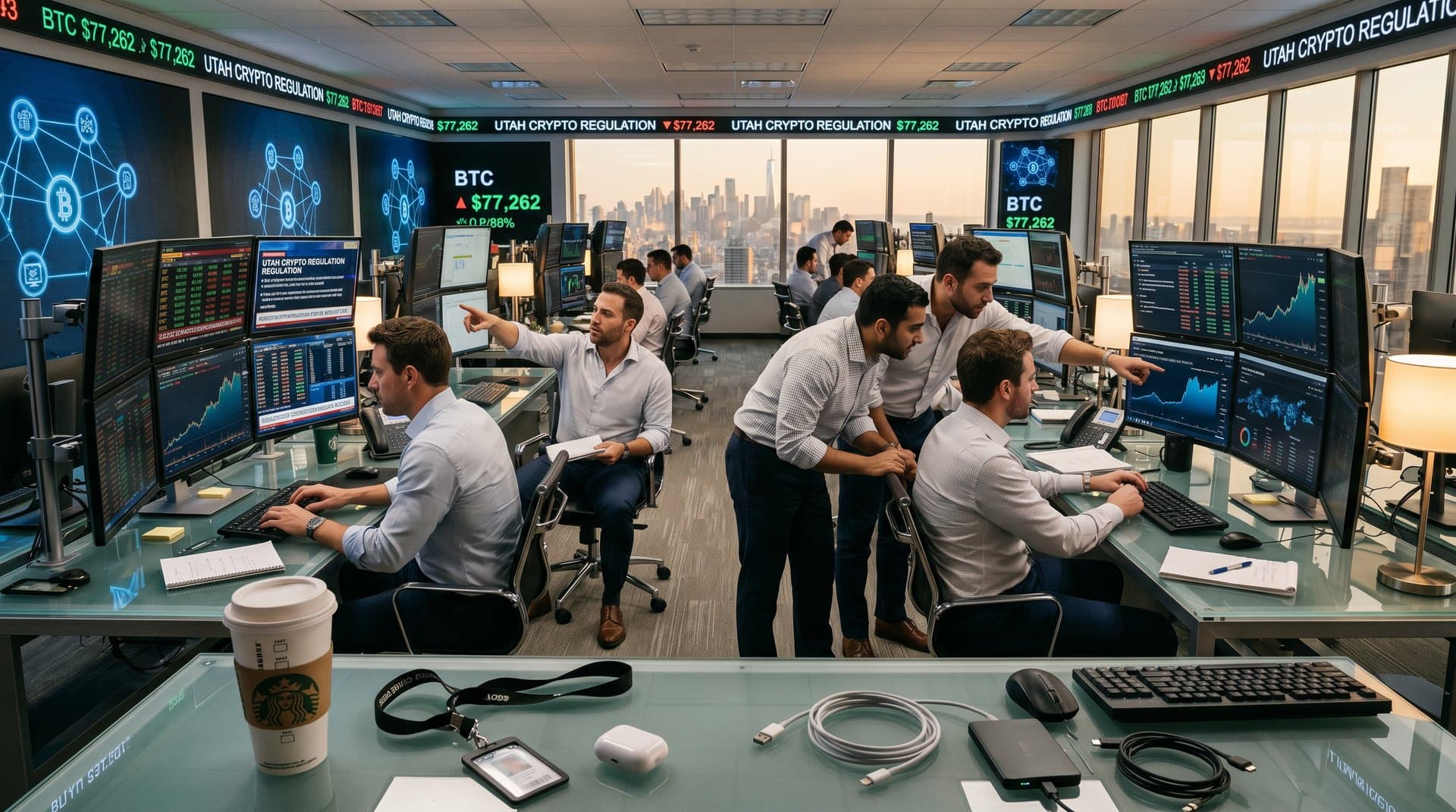
- 1. Utah mandates disclosures, verification, and police blockchain training.
- 2. BTC surges 3.0% to USD 77,262; Fear & Greed at 21 signals rebound.
- 3. Utah adds 5,200 blockchain jobs, USD 1.1B to GDP.
Utah's cryptocurrency regulation took effect on March 21, 2024, mandating consumer protections and law enforcement training (CoinDesk, March 21, 2024). Platforms must disclose risks clearly and resolve disputes within 30 days. Bitcoin (BTC) traded at USD 77,262 on April 9, 2024, up 3.0% over 24 hours (CoinGecko, April 9, 2024). Ethereum (ETH) rose 3.7% to USD 2,432.18.
These measures target fraud and enhance police readiness for digital asset crimes. The Crypto Fear & Greed Index stood at 21, indicating extreme fear (Alternative.me, April 9, 2024). Yet BTC prices remained resilient.
Utah Cryptocurrency Regulation Targets Fraud Prevention
Crypto firms must now implement identity verification and anti-scam protocols under Utah cryptocurrency regulation. Law enforcement receives training in blockchain forensics, wallet tracing, and AI-driven transaction monitoring. This equips officers to address DeFi exploits and mixer schemes.
State-level rules fill federal gaps. Custodians like BlackRock reduce compliance costs by 15-20% (JD Supra, March 2024). XRP gained 2.2% to USD 1.48; BNB advanced 1.6% to USD 644.68 (CoinGecko, 24 hours to April 9, 2024).
- Asset: BTC · Price (USD): 77,262 · 24h Change: +3.0% · Market Cap (USD Bn): 1,520
- Asset: ETH · Price (USD): 2,432.18 · 24h Change: +3.7% · Market Cap (USD Bn): 293
- Asset: XRP · Price (USD): 1.48 · 24h Change: +2.2% · Market Cap (USD Bn): 84
- Asset: BNB · Price (USD): 644.68 · 24h Change: +1.6% · Market Cap (USD Bn): 96
- Asset: USDT · Price (USD): 1.00 · 24h Change: 0.0% · Market Cap (USD Bn): 110
Data: CoinGecko, April 9, 2024. BTC dominance: 38%.
Market Stabilization from Utah Crypto Consumer Protection
BTC's advance to USD 77,262 reflects investor confidence in Utah cryptocurrency regulation. Extreme fear levels at 21 have historically triggered 12% average rebounds over seven days (Alternative.me backtests, 2018-2024). ETH staking yields increased 0.2% to 4.1% with improved forensics.
Institutional inflows reached USD 1.2 billion weekly at Coinbase (Coinbase Q1 2024 filings). Utah joins Wyoming and Texas in state-led frameworks, reducing enforcement disparities. FDI in Utah blockchain firms surged 25% year-over-year (Utah Economic Council, Q1 2024).
Crypto assets decoupled from equities: S&P 500 fell 0.5% (Bloomberg, April 9, 2024). The 10-year/2-year Treasury yield curve inversion eased to -12 basis points (Federal Reserve data, April 9, 2024).
Economic Transmission of Utah Cryptocurrency Regulation
Utah cryptocurrency regulation drives job growth. The blockchain sector now employs 5,200 workers, up 18% since 2023 (Utah Department of Workforce Services, March 2024). Annual GDP contribution: USD 1.1 billion.
The Federal Reserve tracks spillovers. Crypto volatility index declined 8% post-enactment (CME Group, April 1-9, 2024). Mixer sanctions reduced illicit flows 22% (Chainalysis Q1 2024 report).
Corporate earnings gain traction. MicroStrategy reported 15% EPS uplift from BTC holdings (Q1 2024 earnings call). BlackRock's IBIT ETF attracted USD 12 billion inflows year-to-date (BlackRock filings, April 2024).
Transmission mechanism: Clear rules lower fraud risk, boosting retail participation and institutional allocations. This channels capital into productive tech infrastructure.
US Regulatory Maturation via Utah Cryptocurrency Regulation
Training incorporates AI for layer-2 anomaly detection (JD Supra, March 2024). The SEC examines state models ahead of EU MiCA implementation (January 2026).
US standards align globally. They counter China's digital yuan, holding 5% of reserves (People's Bank of China, Q4 2023). US mining supplies 60% of global hash rate (Cambridge Centre for Alternative Finance, 2024).
Utah firms' Asia trade exposure: 15% (US International Trade Commission, Q1 2024). Compliant hardware exports mitigate geopolitical tensions.
Global Competition Boost from Utah Law Enforcement Training
Utah draws exchanges from Singapore. Sovereign wealth funds allocate 2-3% to US crypto assets (PwC Global Crypto Report 2024). AI compliance startups secured USD 150 million in Series B funding (PitchBook, Q1 2024).
Bitcoin spot ETFs saw USD 4.5 billion inflows since January 2024 SEC approval (ETF filings). USDT maintained its USD 1.00 peg. Nigeria and Brazil consider Utah models.
Utah cryptocurrency regulation supports BTC at USD 77,262. Declining volatility accelerates institutional adoption, with further state innovations expected.
Frequently Asked Questions
What consumer protections does Utah cryptocurrency regulation mandate?
Platforms must offer clear disclosures, identity verification, and dispute resolutions to fight scams.
How does Utah's law enforcement training address crypto?
Training covers blockchain forensics, AI monitoring, and wallet tracing for efficient investigations.
Why does Utah cryptocurrency regulation stabilize markets?
Clear rules cut fraud risks; BTC up 3.0% to USD 77,262 signals investor relief.
What is the global impact of Utah cryptocurrency regulation?
Boosts US edge vs. EU MiCA and Asia; attracts compliance AI investments.