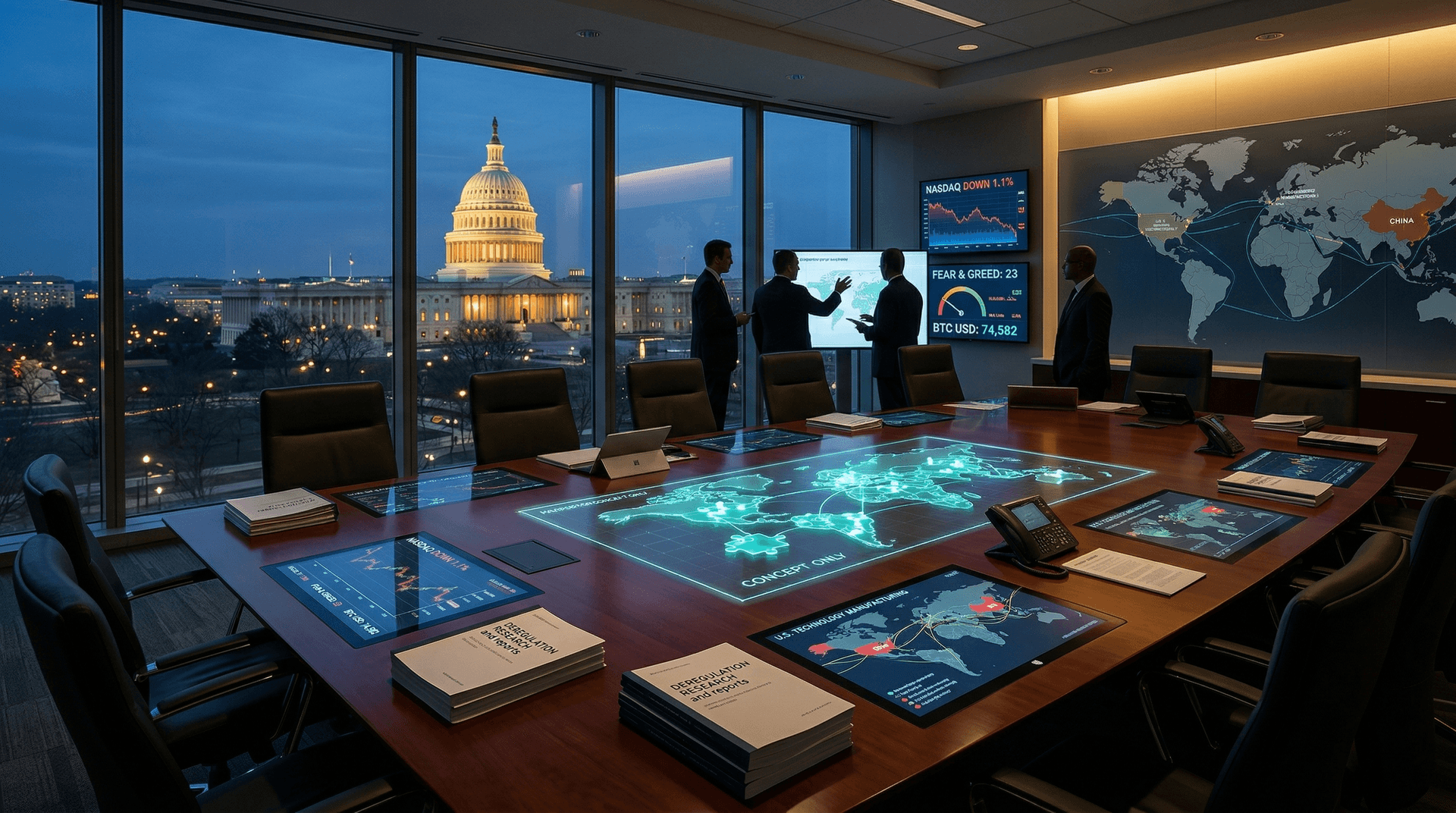
- Cyberwar new frontier shifts 12% of defense budgets to cyber (DoD FY2026).
- Fear & Greed Index drops to 23; Bitcoin up 1% to USD 74,981 (CoinGecko).
- XRP surges 3.3% to USD 1.40 on resilient payment demand.
Cyberwar new frontier advances force governments to shift 12% of defense budgets to cyber defenses on April 16, 2026 (DoD FY2026). Alternative.me's Crypto Fear & Greed Index drops to 23. Bitcoin trades at USD 74,981, up 1.0% in 24 hours per CoinGecko.
State actors deploy AI-driven attacks. Quantum computing threatens RSA encryption, NIST warns in its 2026 advisory. US DoD FY2026 budget allocates USD 108 billion to cyber programs, up from 8% or USD 86 billion in FY2025.
Developments ripple to markets. Investors chase cyber-resilient assets. Ethereum rises 1.0% to USD 2,353.79 (CoinGecko). XRP jumps 3.3% to USD 1.40 on secure cross-border demand.
Fear & Greed Index Signals Caution in Cyberwar New Frontier
Alternative.me's Fear & Greed Index hits 23, down from 35 last week. Cyber threats spike crypto volatility. Traders close high-risk positions, amplifying downside risks.
Banks face 25% more attacks year-over-year (Verizon 2025 DBIR). DeFi draws USD 15 billion inflows in Q1 2026 (DeFiLlama), resisting single-point failures.
Federal Reserve models show major cyber breach disrupts 2% of US GDP payments (2025 stress tests). Central banks track cyber risks with inflation.
Bitcoin Holds USD 74,981 Amid Cyberwar Strain
Bitcoin reaches USD 74,981 on CoinGecko, up 1.0% in 24 hours as of April 16, 2026. Distributed ledgers protect against centralized outages.
Cyber attacks hit power grids and satellites. New York and London hubs boost cyber spending 15% in Q1 2026 (Bloomberg). Bitcoin demand rises as hedge.
China uses machine learning for breaches (Mandiant M-Trends 2026). Cyber startups raise USD 5 billion VC in Q1 2026 (PitchBook). Bitcoin hash rate climbs 5%.
XRP Surges 3.3% on Cyber-Resilient Payments
XRP hits USD 1.40, up 3.3% (CoinGecko). Ripple protocols secure cross-border flows, bypassing sanctions. USDT holds USD 1.00 peg.
Global cyber budgets grow 18% to USD 250 billion in 2026 (SIPRI). VC invests USD 12 billion in AI security year-to-date.
US tariffs hit vulnerable IoT imports at 25% (USTR). Supply chains shift, boosting XRP volumes 22% week-over-week.
Cyberwar New Frontier Drives Macro Shifts
Malware halts factories at USD 1 billion daily cost (IBM 2026 Cost of a Data Breach Report). State actors upgrade arsenals yearly. CISA tracks Russia-China campaigns (April 2026 advisory).
Funds shift 15% to cyber tech. Microsoft adds 20% more security staff (Q1 2026 earnings). Investors rotate from cyber-exposed assets.
US Treasury curve inverts 10 basis points on risk-off flows. Cyber ETFs beat markets by 8% year-to-date (ETF.com).
Nations Realign Alliances in Cyberwar New Frontier
Russia and China spend USD 10 billion yearly on cyber (Jane's Defence Weekly 2026). US pushes global frameworks. NATO adds cyber to Article 5 (2026 summit).
Allies share intel on joint platforms. Exercises run USD 500 million annually (DoD). India raises cyber spend 22% to USD 4 billion (FY2026).
Brazil secures grids post-hacks (gov reports). USD gains 0.5% vs EUR on haven flows (Bloomberg FX).
Supply Chains Battle Cyber Threats
Hacks cost auto lines USD 1.2 billion daily (IBM 2026). Chip firms diversify suppliers 30% (SEMI Q1). Sanctions add 5% trade compliance costs.
Oil infrastructure hardens, lifting Brent USD 2 premium. ECB cyber tests double bank capital. Eurozone banks hold EUR 50 billion extra.
Corporates Bolster Resilience for Earnings
Firms run quarterly audits. S&P 500 raises cyber spend 10% (Q1 2026 calls). M&A grabs detection tech at USD 2 billion Series B.
ESG adds cyber scores. BNB rises 1.3% to USD 623.69 (CoinGecko). Equities bake in 3% higher volatility.
Policy Steers Capital Flows
US Treasury raises alerts. UN cyber talks stall. Markets brace for breaches, spurring USD 20 billion cyber investments Q2 2026 (CB Insights).
Central banks add cyber to macro models. Investors favor hard assets and DeFi in prolonged cyberwar new frontier.
This article was generated with AI assistance and reviewed by automated editorial systems.