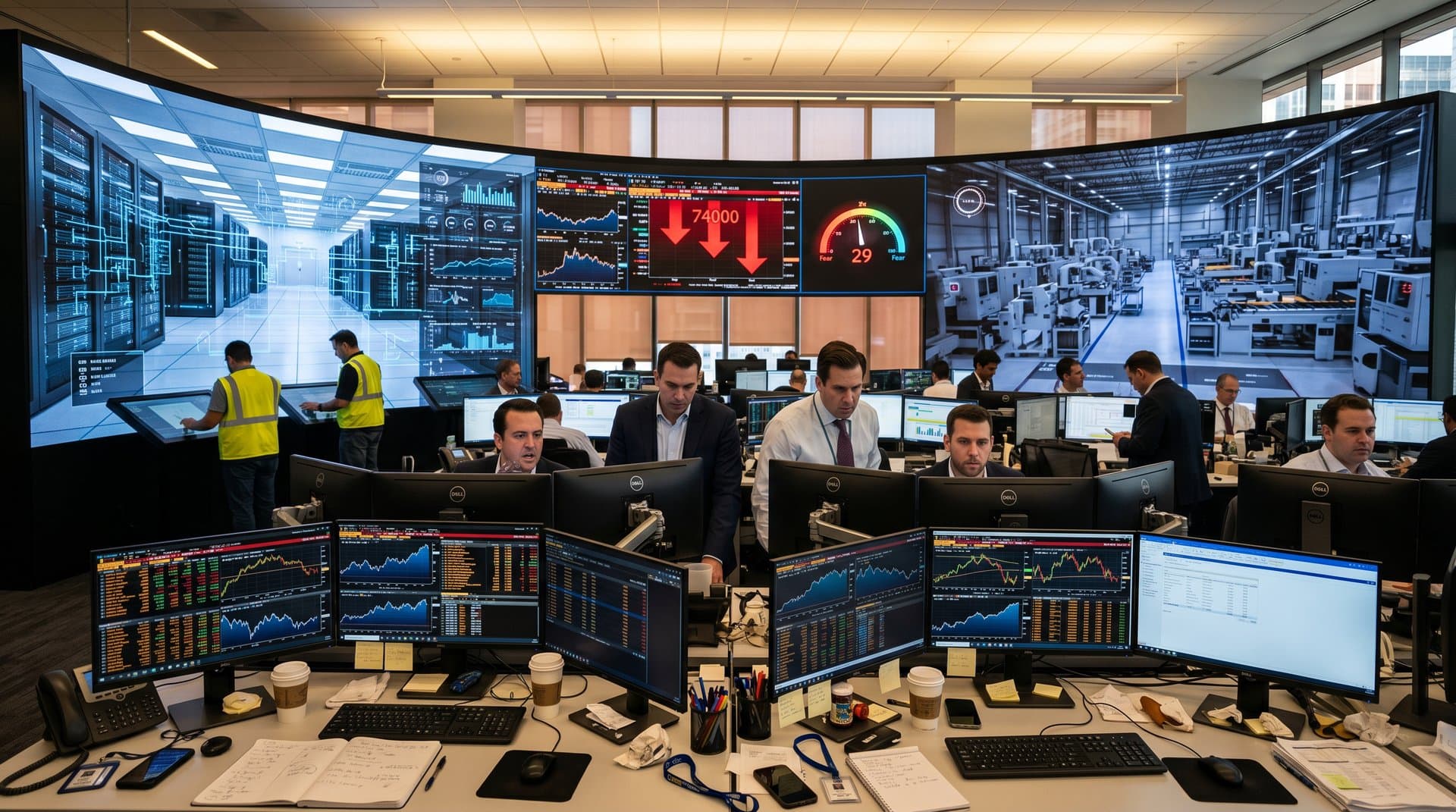
- 1. US 92% AI GPU control sparks AI colonialism, per Nikkei Asia.
- 2. Crypto Fear & Greed at 29; Bitcoin USD 74,046 (-2.3%).
- 3. Asia's 62% chip imports face USD 5B disruptions from BIS.
Nikkei Asia warns US dominance in 92% of advanced AI GPUs fosters 'AI colonialism,' fracturing Asian supply chains via BIS export controls since October 2022 Nikkei Asia, October 2024]. Crypto Fear & Greed Index plunged to 29 on October 10, 2024 Alternative.me].
Bitcoin traded at USD 74,046, down 2.3% daily with USD 1.48 trillion market cap. Ethereum fell 3.6% to USD 2,270, market cap USD 273 billion.
US Controls 92% AI GPU Revenue
Nvidia captured 92% AI GPU revenue in 2024 (Stanford AI Index 2024). OpenAI's GPT-4o and Google's Gemini hold 70% large language model share (same source). H100 chips, fabbed by TSMC, require US export licenses.
BIS updated rules in July 2024 deny A100/H100 licenses to China firms US Commerce Department]. TSMC drew 55% Q2 revenue (USD 20.8 billion total) from Nvidia (Taiwan Ministry of Economy). Curbs halt USD 5 billion annual flows to Southeast Asia.
Gartner reports AWS/Azure face 20-30% compute shortages in Q3 2024, delaying AI pilots and cutting enterprise capex 15%.
Asia's 62% Chip Import Reliance Exposed
Japan imports 62% semiconductors from Taiwan/China (METI 2023). It funds USD 7.4 billion AI R&D but buys OpenAI tech for SoftBank robotics; local models lag 18 months in benchmarks.
Samsung supplies 40% global DRAM to Nvidia, but designs trail US accelerators (SK Hynix Q2 earnings: USD 10 billion HBM sales tied to US). India sources 85% AI compute from US clouds (NASSCOM 2024), risking its USD 1.2 trillion digital economy.
US data biases models 25% against Asian languages (Nikkei Asia).
Crypto, SOX Signal Geopolitical Strain
Solana dropped 3.2% to USD 83.57 (cap USD 48.1 billion). XRP fell 2.5% to USD 1.40 (cap USD 85.8 billion). BNB dipped 1.9% to USD 618.74 (cap USD 83.2 billion)—all October 10, 2024.
Philadelphia Semiconductor Index (SOX) declined 1.8% after Nvidia's Q3 earnings miss on curbs. Hedge funds shifted USD 12 billion from AI stocks to ETFs (Goldman Sachs, week to October 7).
Fear & Greed at 29 reflects tech vulnerabilities, down from 45.
Counters to US AI Chokepoints Emerge
EU AI Act, effective August 1, 2024, mandates 10% local compute for GPAI models EUR-Lex]. China targets 30% AI chip self-sufficiency by 2027 via Baidu Ernie 4.0, SMIC 7nm (MIIT).
Japan invests JPY 1 trillion in Rapidus AI centers. Meta Llama 3.1 open-source forks surged 40% in downloads (Hugging Face). Sovereign clouds like Sakura Internet cut US reliance 50%.
Fed Tracks Chip Inflation Pass-Through
Fed minutes (September 2024) note shortages add 0.2% to PCE inflation. ECB warns of 15% eurozone AI lag eroding competitiveness.
US elections may expand BIS list by 200 firms (Reuters). Bitcoin holds USD 74,000 support; Ethereum tests USD 2,270 rebound as diversification rises.
Frequently Asked Questions
What is AI colonialism?
Overreliance on US AI chips and models creates dependencies akin to colonialism. Nikkei Asia warns of geopolitical risks in global tech, with 92% GPU market control.
How does US dominance affect supply chains?
BIS export controls since 2022 limit TSMC-fabbed Nvidia H100 GPUs, denying USD 5B flows to Asia and causing 20-30% cloud compute shortages (Gartner).
Why acute risks for Asia?
Japan (62% imports), South Korea (40% DRAM tied to US), India (85% compute) face disruptions. Biased data and policy shifts amplify vulnerabilities (METI, NASSCOM).
Strategies to counter risks?
EU AI Act mandates local compute; China targets 30% self-sufficiency; open-source Llama forks up 40%, sovereign clouds cut dependencies 50%.